Walmart’s weekly flyer is one of the most widely checked in the country, and for good reason — between Rollback pricing, seasonal clearance events, and deep markdowns across grocery, household, and general merchandise, there’s usually something worth planning a trip around every single week. Getting an early look at the flyer before the new cycle starts makes it much easier to build a shopping list around the best deals rather than discovering them after you’re already in the store.
Below is the current Walmart flyer, along with a full breakdown of how Walmart’s Rollback and clearance pricing actually works, how the Walmart Rewards program ties into savings, and how to make the most of every trip. This page updates every week with a new set of flyer pages, so check back each cycle for the latest deals.
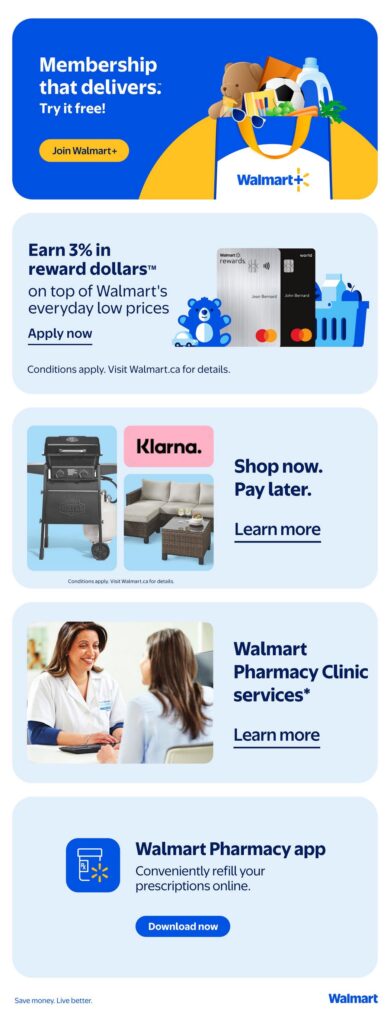
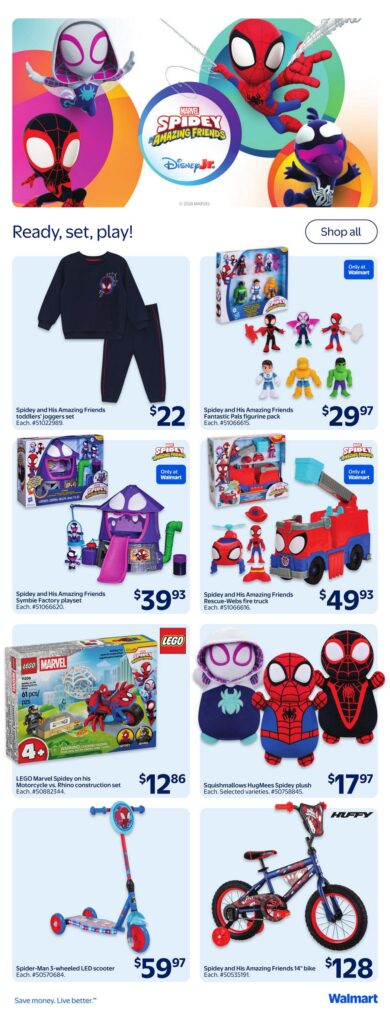
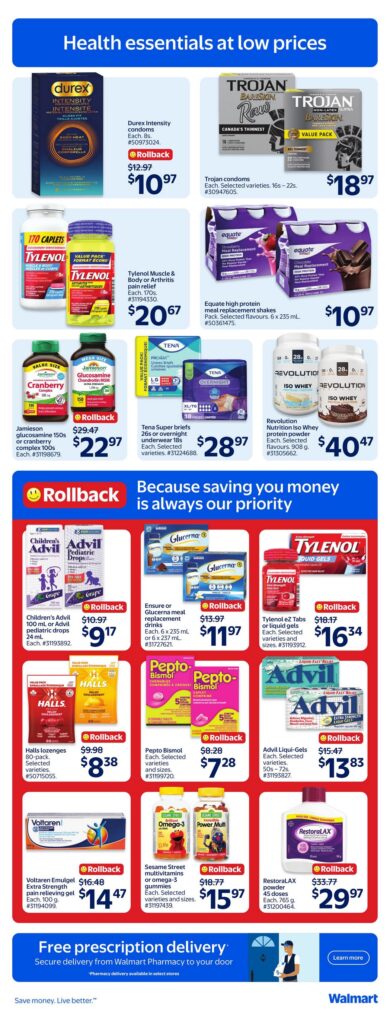
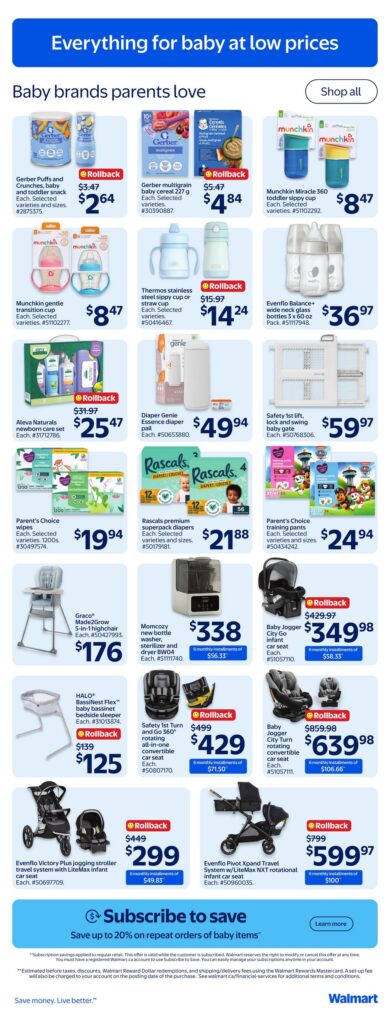
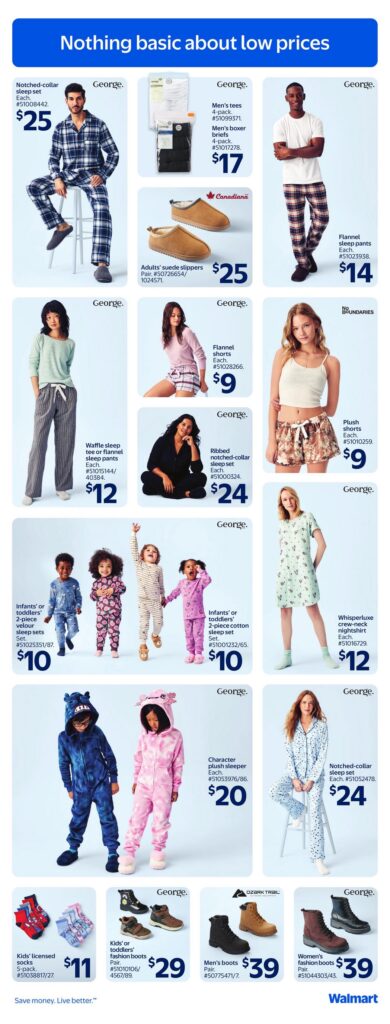
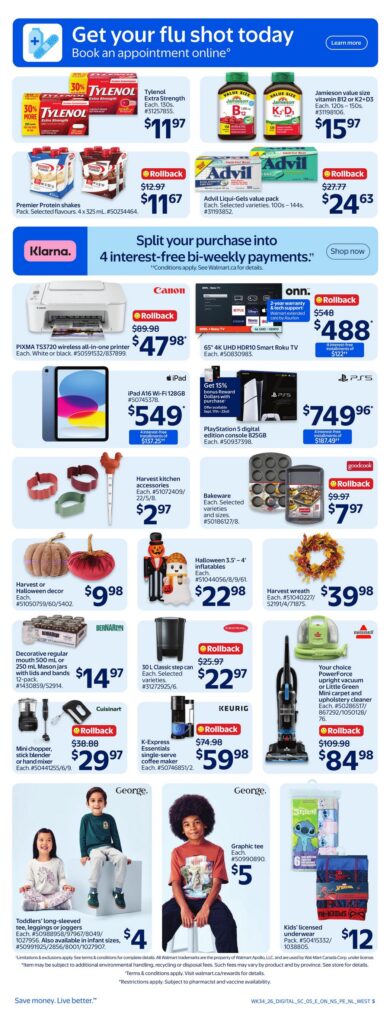
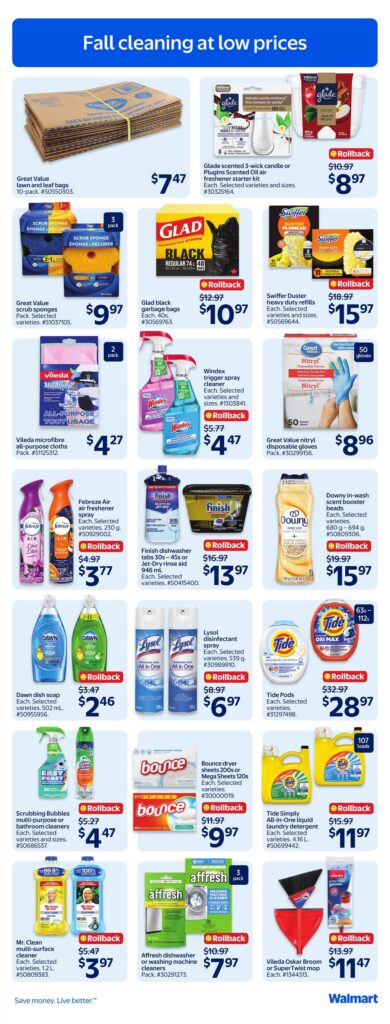
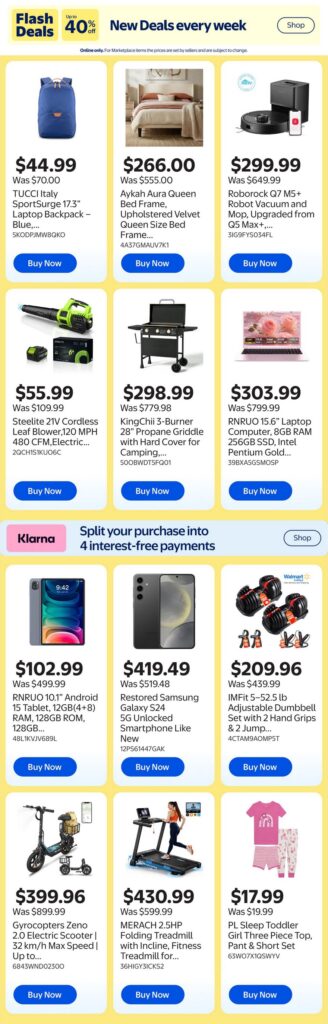
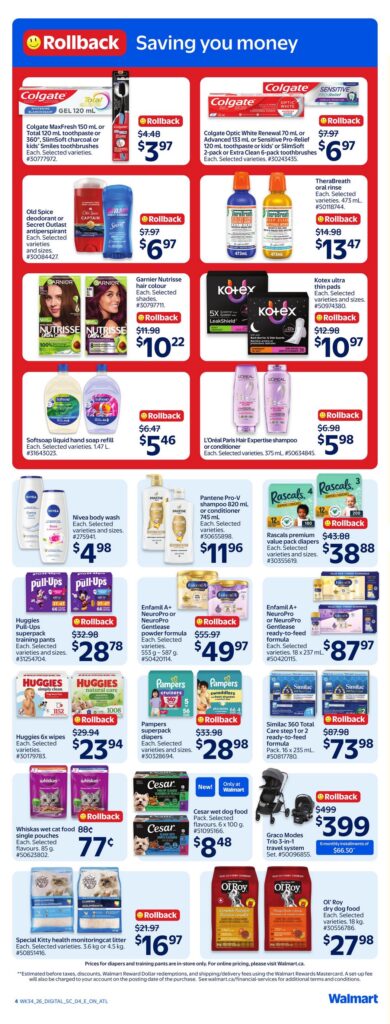
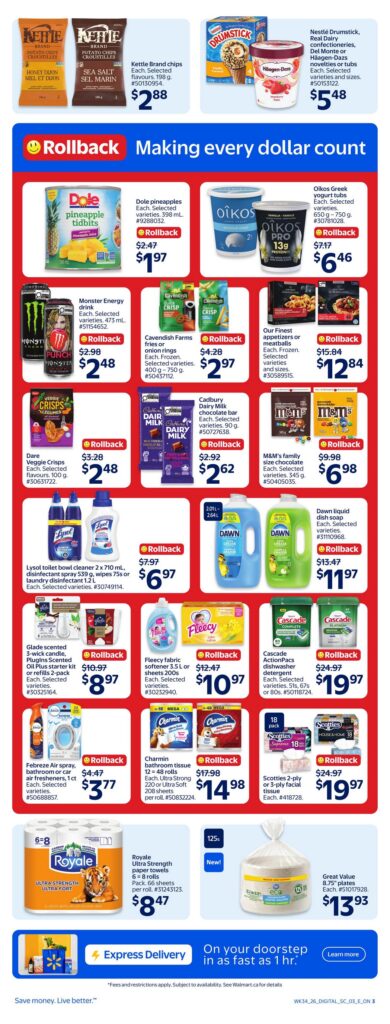
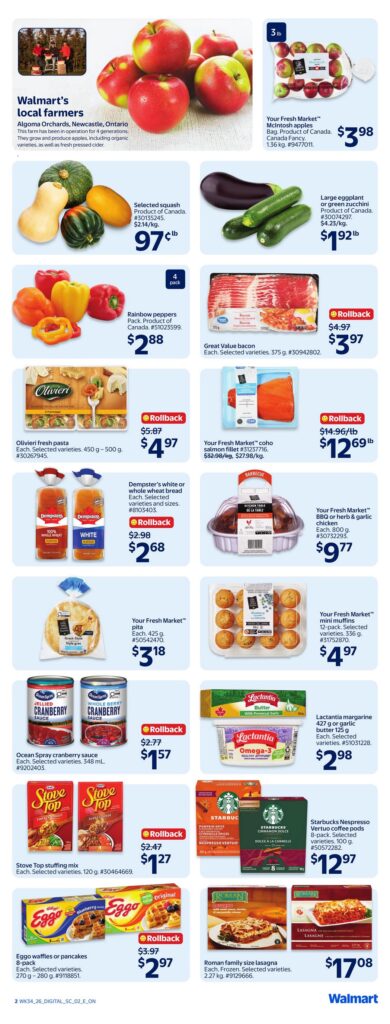
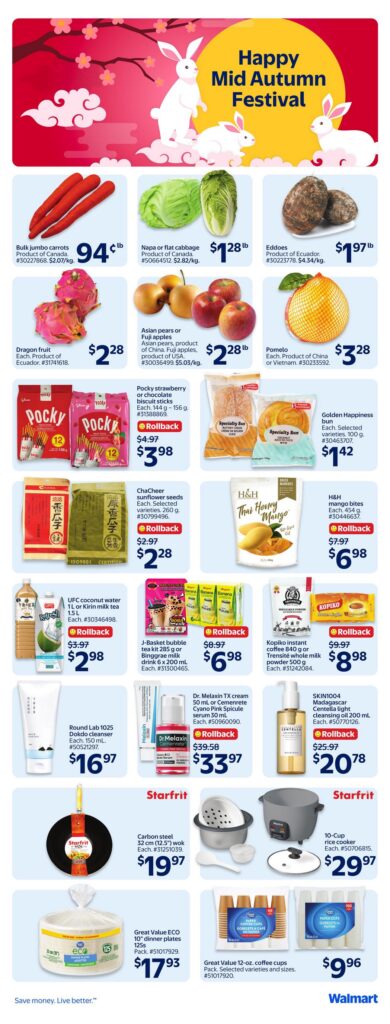
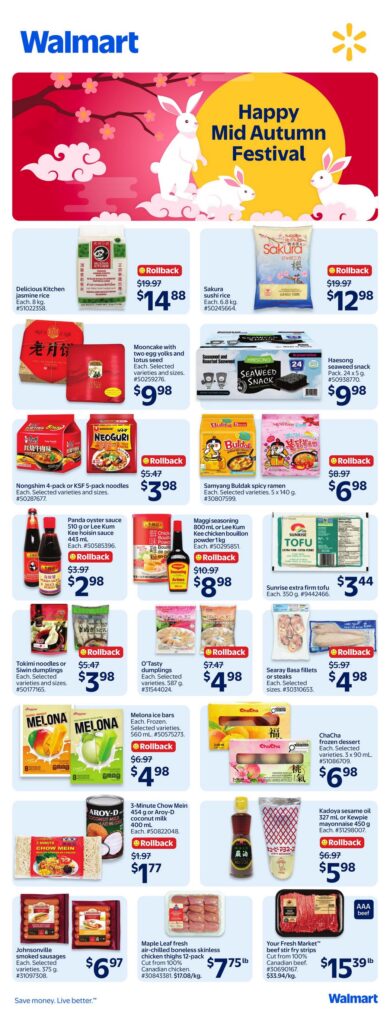
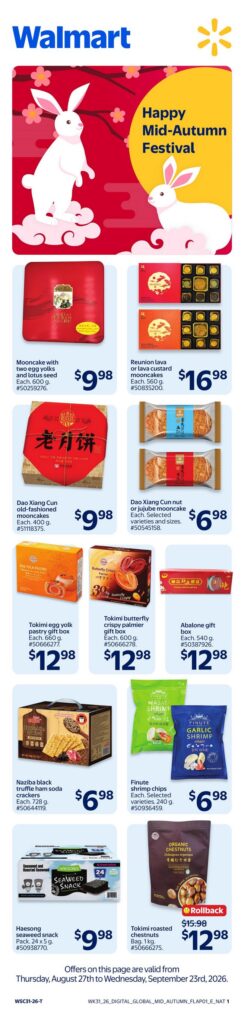
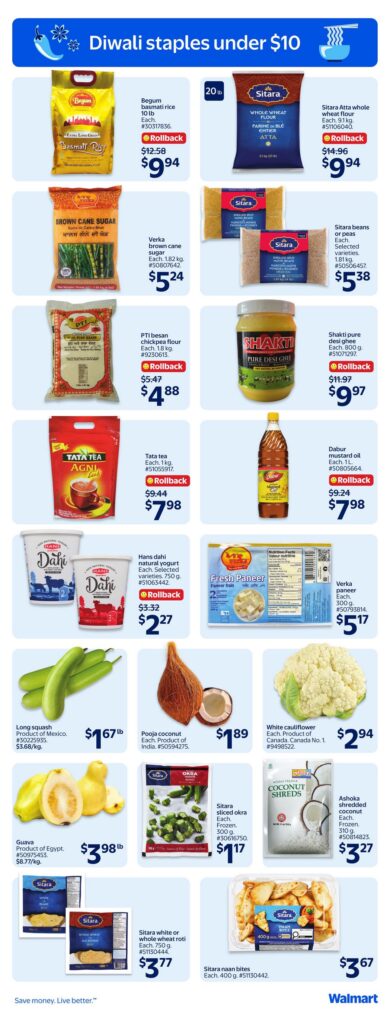
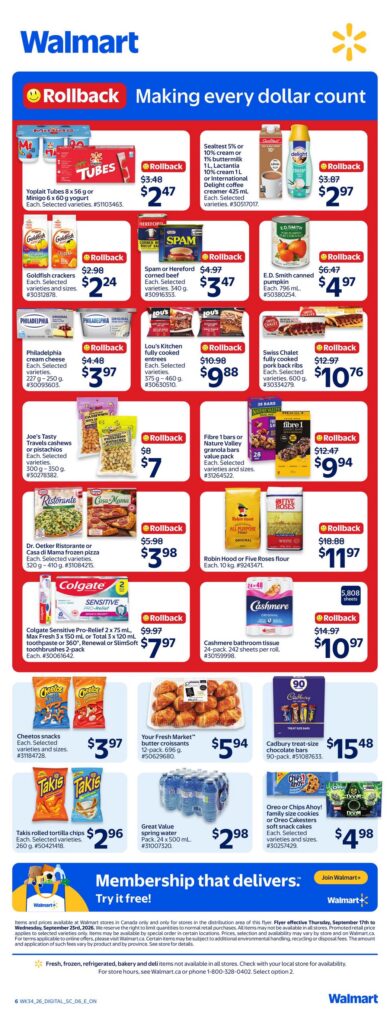
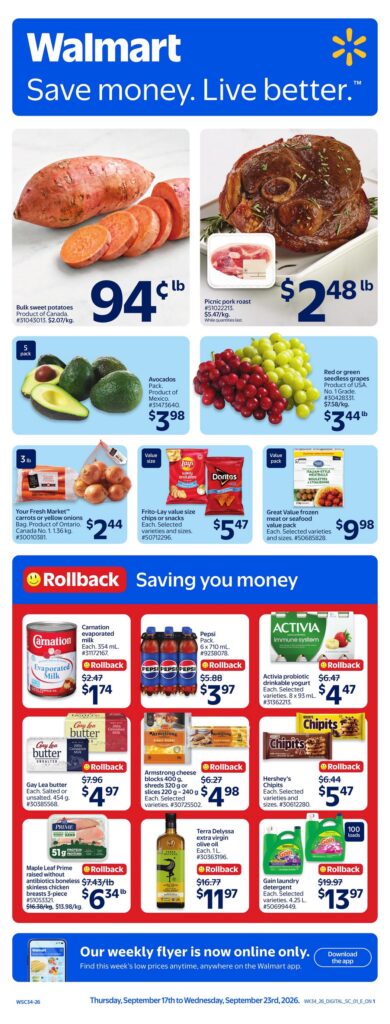
Click the arrows or buttons to flip through the images
How the Walmart Flyer Works
Walmart’s flyer cycle typically runs Thursday through the following Wednesday, in line with the schedule used by most major retailers in Canada. New pricing takes effect Thursday morning and holds through the following Wednesday night before the next flyer begins.
The flyer usually blends grocery specials with general merchandise, which sets it apart from a store that only sells food. A typical Walmart flyer moves through fresh grocery markdowns first, then into pantry and household staples, before dedicating a significant portion of the back pages to seasonal items, electronics, home goods, and clothing. A few things are worth understanding about how Walmart structures its flyer specifically:
- Most flyer prices apply to every shopper automatically, with no loyalty card required. This is a meaningful difference from several grocery-focused competitors, where the majority of weekly discounts are gated behind scanning a rewards card.
- “Rollback” and “Clearance” are two distinct pricing categories. A Rollback is a temporary price reduction on a regularly stocked item, while Clearance pricing typically signals the item is being phased out or reduced permanently, often at a steeper discount.
- The flyer covers far more than groceries. Because Walmart operates as a general merchandise retailer, the flyer regularly features seasonal categories — patio and garden in spring/summer, back-to-school in late summer, and holiday gift categories later in the year — alongside the standard grocery specials.
Understanding Rollback vs. Clearance vs. Everyday Low Price
Walmart’s broader pricing philosophy is built around “Every Day Low Price” (EDLP) rather than a system of frequent, deep promotional swings, which changes how the flyer should be read compared to a traditional grocery circular:
- Everyday Low Price items are priced competitively year-round and generally don’t appear as “on sale” in the flyer at all, since the everyday price is already meant to be the lowest available.
- Rollback pricing is a temporary, advertised reduction on an item’s regular price, typically used to drive traffic on a specific product for a limited window — these are the items that show up most prominently in the flyer.
- Clearance pricing usually reflects inventory being phased out, discontinued, or reduced to make room for new stock, and can sometimes represent the deepest discounts in the store, though availability is limited to existing inventory and won’t be restocked once it sells out.
- Seasonal event pricing (back-to-school, holiday, spring cleaning, etc.) layers temporary category-wide promotions on top of the regular flyer cadence during specific times of year.
The Walmart Rewards Program and How It Layers on Top of the Flyer
While flyer pricing itself doesn’t require a loyalty account, Walmart’s rewards program can add meaningful additional value on top of the advertised price:
- Cashback-style rewards accumulate on qualifying purchases, including many flyer items, and are typically redeemable directly at checkout on a future purchase rather than functioning as a traditional points system.
- The Walmart app frequently surfaces personalized offers that go beyond what’s shown in the general flyer, based on shopping history and location.
- Membership tiers offering additional perks (such as free shipping thresholds or delivery benefits) are separate from flyer pricing itself but can add value for households that also shop online between flyer cycles.
How to Read the Flyer for Maximum Savings
- Scan for Rollback tags specifically, since these represent the core of the flyer’s advertised savings on regularly stocked items.
- Check the Clearance section separately, understanding that availability will vary by store and won’t be replenished once the current stock sells out.
- Compare grocery specials against a dedicated grocery competitor’s ad, since Walmart’s everyday low pricing model means its flyer discounts on food staples may be smaller in percentage terms than a grocery-focused chain’s weekly sale, even if the final price is similar or better.
- Watch for seasonal category pushes. If the flyer is running during a seasonal transition (back-to-school, holiday, spring/summer), expect a larger share of the flyer to be dedicated to that category than in a typical week.
- Open the app before shopping to check for personalized cashback-eligible offers that may not appear in the general printed or digital flyer.
What Categories Go on Sale Most Often
Certain categories show up in the Walmart flyer more consistently than others:
- Grocery staples and produce — rotate weekly, though typically with more modest percentage discounts than a grocery-focused competitor, in keeping with Walmart’s everyday-low-price model.
- Household basics and cleaning supplies — frequently featured in Rollback pricing, often tied to multi-buy or bundle promotions.
- Seasonal general merchandise — patio and outdoor in warmer months, back-to-school supplies in late summer, and holiday and gift categories later in the year typically dominate a large share of flyer real estate during those windows.
- Electronics and home goods — regularly appear in Rollback and Clearance sections, especially around major shopping events later in the year.
Comparing the Walmart Flyer to Grocery-Focused Competitors
If you split your shopping between Walmart and a grocery-focused chain, here’s how the flyer approach differs:
- No loyalty card required for advertised pricing, unlike several grocery chains where most weekly discounts are gated behind a rewards card scan.
- A broader mix of categories. A grocery-focused flyer is built almost entirely around food; Walmart’s flyer regularly dedicates a significant share of its pages to general merchandise, seasonal goods, and household items alongside grocery specials.
- Smaller percentage discounts on grocery staples, but a lower starting price. Because Walmart’s core pricing model already emphasizes low everyday prices, its grocery markdowns may look less dramatic on paper than a grocery-focused competitor’s weekly ad, even when the final shelf price is comparable or lower.
- Clearance pricing plays a bigger role than in most single-category grocery flyers, since Walmart’s broader merchandise mix creates more inventory that eventually needs to be phased out and marked down permanently.
Tips for Getting the Most Out of the Walmart Flyer
- Check the flyer at the start of the cycle to catch the best selection on Rollback and seasonal items before in-demand products sell out.
- Treat Clearance items as first-come, first-served, since stock won’t be replenished once it’s gone at a given location.
- Open the app for personalized cashback-eligible offers that go beyond the general flyer.
- Compare flyer grocery pricing against a dedicated grocery chain’s ad if you regularly shop both, since the better final price sometimes comes from a smaller percentage discount on an already-lower everyday price.
- Plan around seasonal transitions, since flyer content shifts noticeably heading into back-to-school, holiday, and other seasonal shopping windows.
Frequently Asked Questions
When does the Walmart flyer start and end? The flyer cycle typically runs Thursday through the following Wednesday, in line with the schedule used by most major retailers.
Do I need a loyalty card to get Walmart’s flyer prices? No. Advertised flyer pricing, including Rollback deals, generally applies to any shopper automatically at checkout, without requiring a loyalty card or app scan.
What’s the difference between a Rollback and a Clearance price? A Rollback is a temporary price reduction on a regularly stocked item that will likely return to its normal price once the promotion ends. Clearance pricing typically signals the item is being phased out or discontinued and won’t be restocked once current inventory sells out.
Does the Walmart Rewards program apply to flyer items? Yes, in many cases. Cashback-style rewards can accumulate on qualifying purchases, including flyer items, though the reward itself is separate from — and layered on top of — the advertised flyer price.
Are Walmart flyer prices the same at every store? Pricing can vary slightly by region and by individual store, particularly for perishable grocery items and Clearance merchandise, so it’s worth confirming exact pricing and availability with your local store.
Why do grocery discounts in the Walmart flyer look smaller than at a grocery-only store? Walmart’s everyday low pricing model means grocery staples are often already priced competitively before any flyer discount is applied, so the percentage-off shown may look smaller even when the final price is comparable to or better than a deeper percentage discount at a store with higher everyday prices.
Flyer images are shown for informational and illustrative purposes only. Prices, products, and promotional dates may vary by location and are subject to change. Please confirm exact pricing, availability, and terms at your local Walmart store.